
Who Checks the Proof Checkers?

Sep 4 …

"We are sharing the first complete computer-checked proof of Fermat's Last Theorem. Claude worked largely autonomously over 11 days to write the proof in the Lean programming language."
… Sep 7 … Sep 8 …
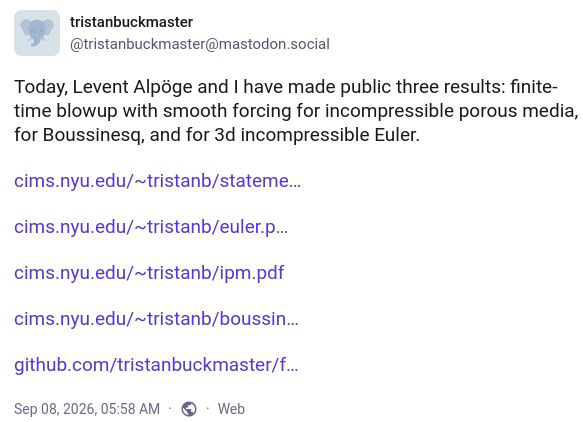
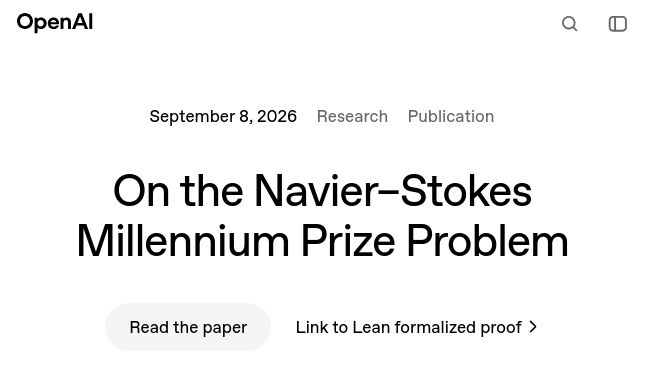
mastodon.social/@tristanbuckmaster ∣ openai.com/index/navier-stokes-solution
What is Lean?
A proof assistant and programming language that is transforming how we approach mathematics, software verification, and AI.
Lean provides machine-checkable proofs.
Lean addresses the trust bottleneck.
Lean is implemented in Lean, and is very extensible and scalable.
It is based on dependent type theory.
Small trusted kernel. Proofs can be exported and independently checked.
325,000+ unique installations: VS Code (184K) + Open VSX (141K).
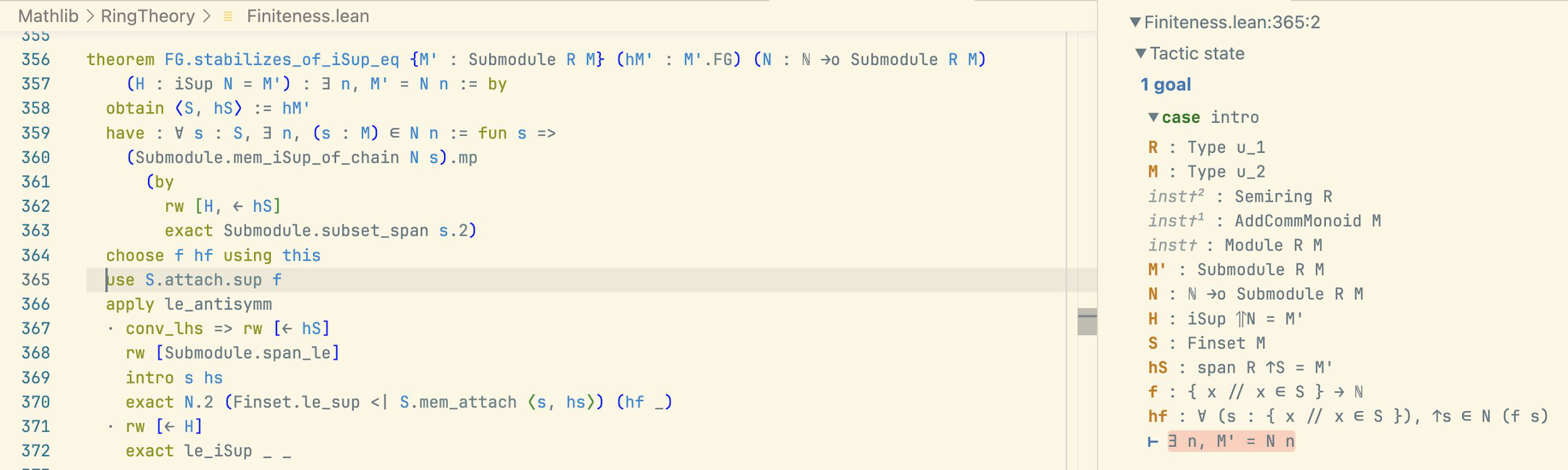
Lean is a "Game"
"You have written my favorite computer game" — Kevin Buzzard, Prof. of Mathematics, Imperial College
def odd (n : Nat) : Prop := ∃ k, n = 2 * k + 1
theorem square_of_odd_is_odd : odd n → odd (n * n) := by
intro ⟨k₁, e₁⟩
simp [e₁, odd]
exists 2 * k₁ * k₁ + 2 * k₁
lia
The "game board": you see goals and hypotheses, then apply "moves" (tactics).
Each tactic transforms the game board.
Mathlib: The Lean Mathematical Library
Created in July 2017, in Lean 3 during Big Proof. An open-source, community-driven library. Today:
-
280,000+ formalized theorems.
-
2.4M+ lines of Lean. 50,000+ lines of extensions.
-
750+ contributors.
-
1,500+ type classes, 20,000+ instances.
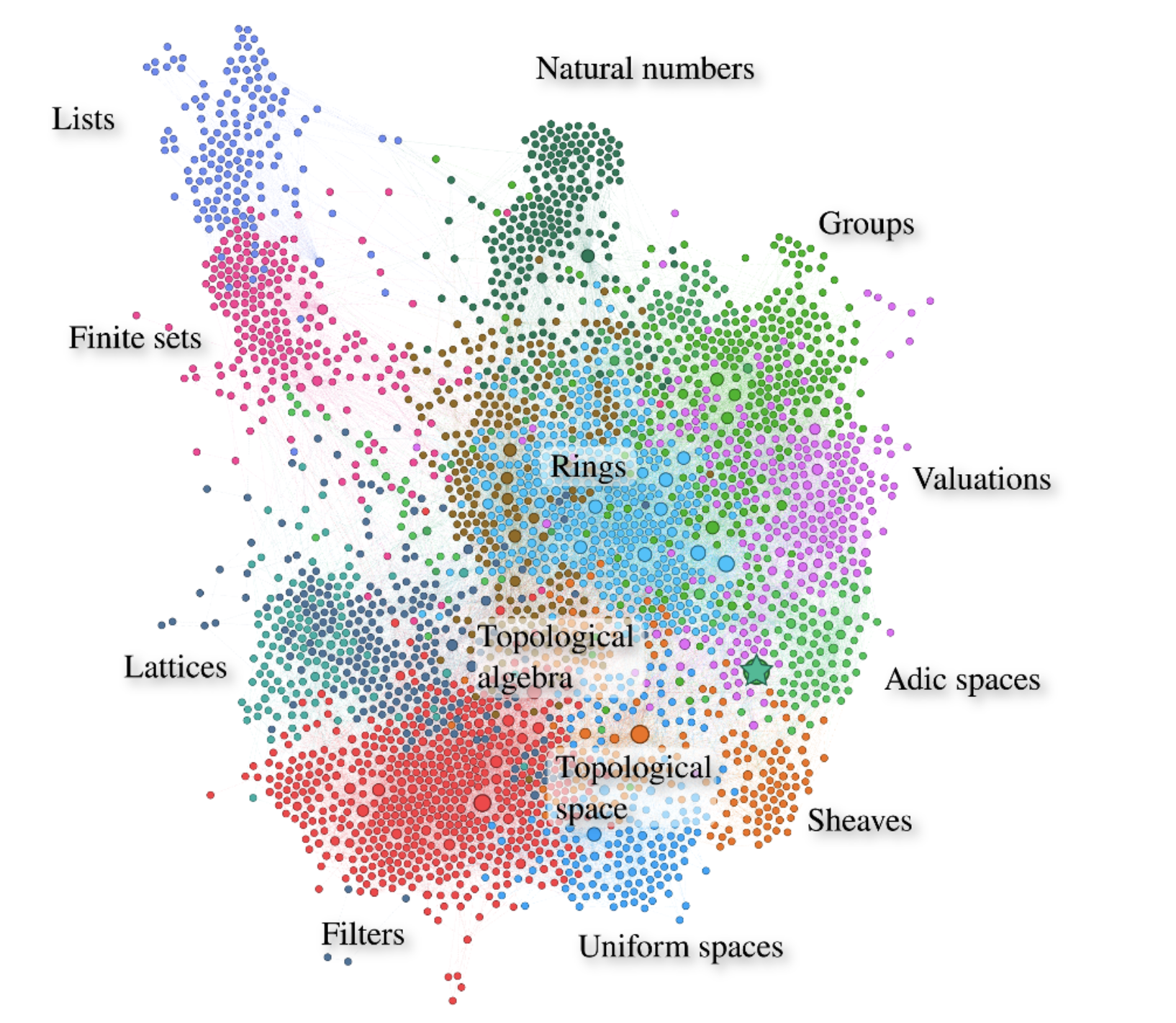
"I'm investing time now so that somebody in the future can have that amazing experience." — Heather Macbeth, Prof. of Mathematics, Imperial College
Mathematics Is Adopting Lean
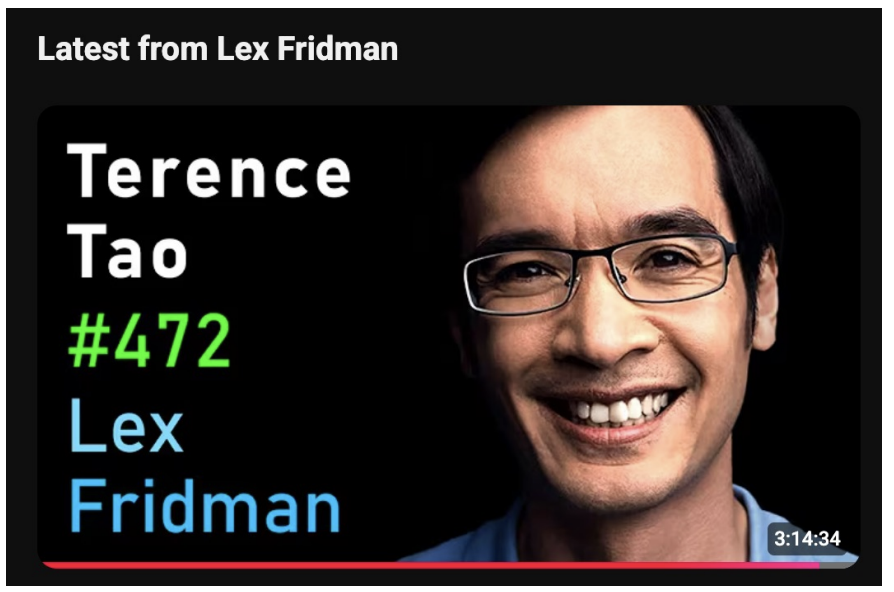
Six Fields Medalists engaged: Tao, Scholze, Viazovska, Gowers, Hairer, Freedman.
-
Carleson's Theorem (completed) — van Doorn
-
Liquid Tensor Experiment (completed) — Commelin
-
The Polynomial Freiman-Ruzsa Conjecture, Tao (completed)
-
Equational Theories Project, Tao (completed)
-
Sphere Packing — Birkbeck, Hariharan, Lee, Ma, Mehta, Viazovska
-
Fermat's Last Theorem — Buzzard
-
Inter-Universal Teichmüller Theory — Mochizuki
-
Fermat's Last Theorem — Anthropic
Software Verification
Lean is not only for mathematics.
-
Cedar (AWS): Verified Authorization
-
SymCrypt (Microsoft): Verified Cryptography
-
Kraken (Google): x64 Semantics
-
ArkLib (Ethereum Foundation): Formally Verified Arguments of Knowledge
-
Signal Shot (Beneficial AI): Verify the Signal protocol and app
-
SampCert (AWS): Differential Privacy
-
CSLib: Computer Science Library
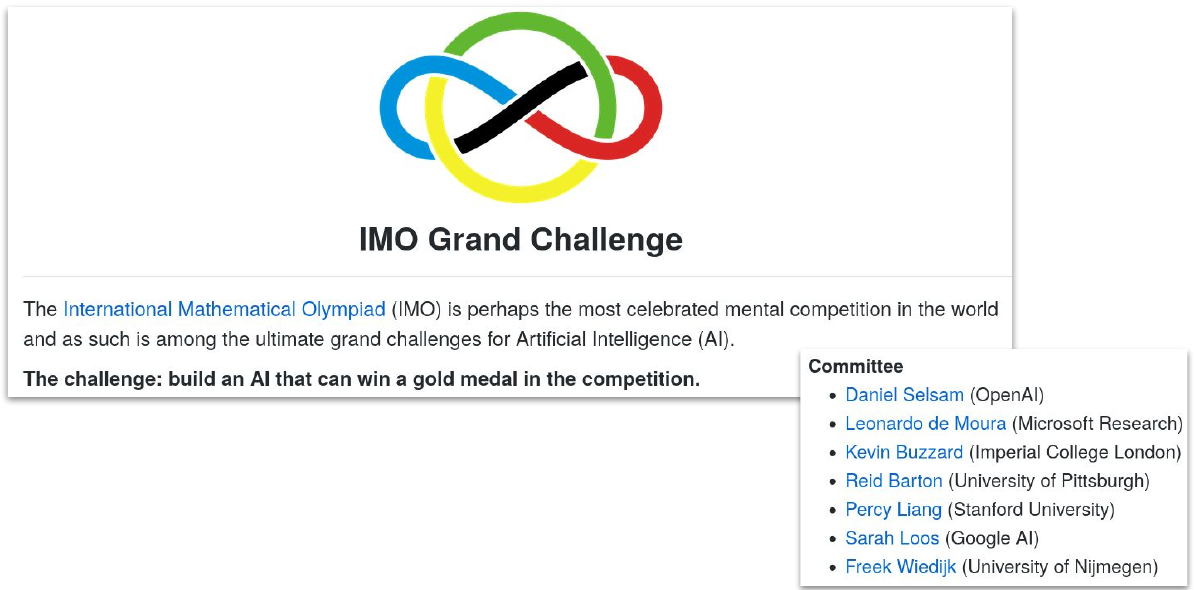
The IMO Grand Challenge (2019)
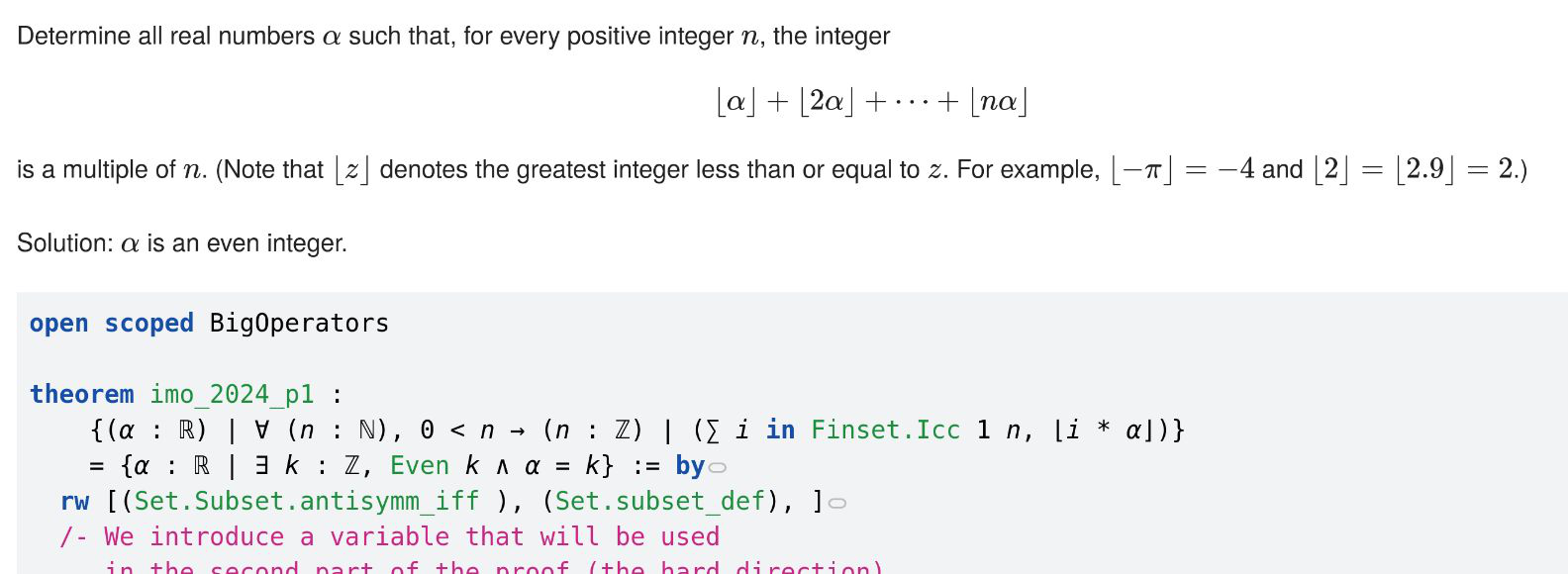
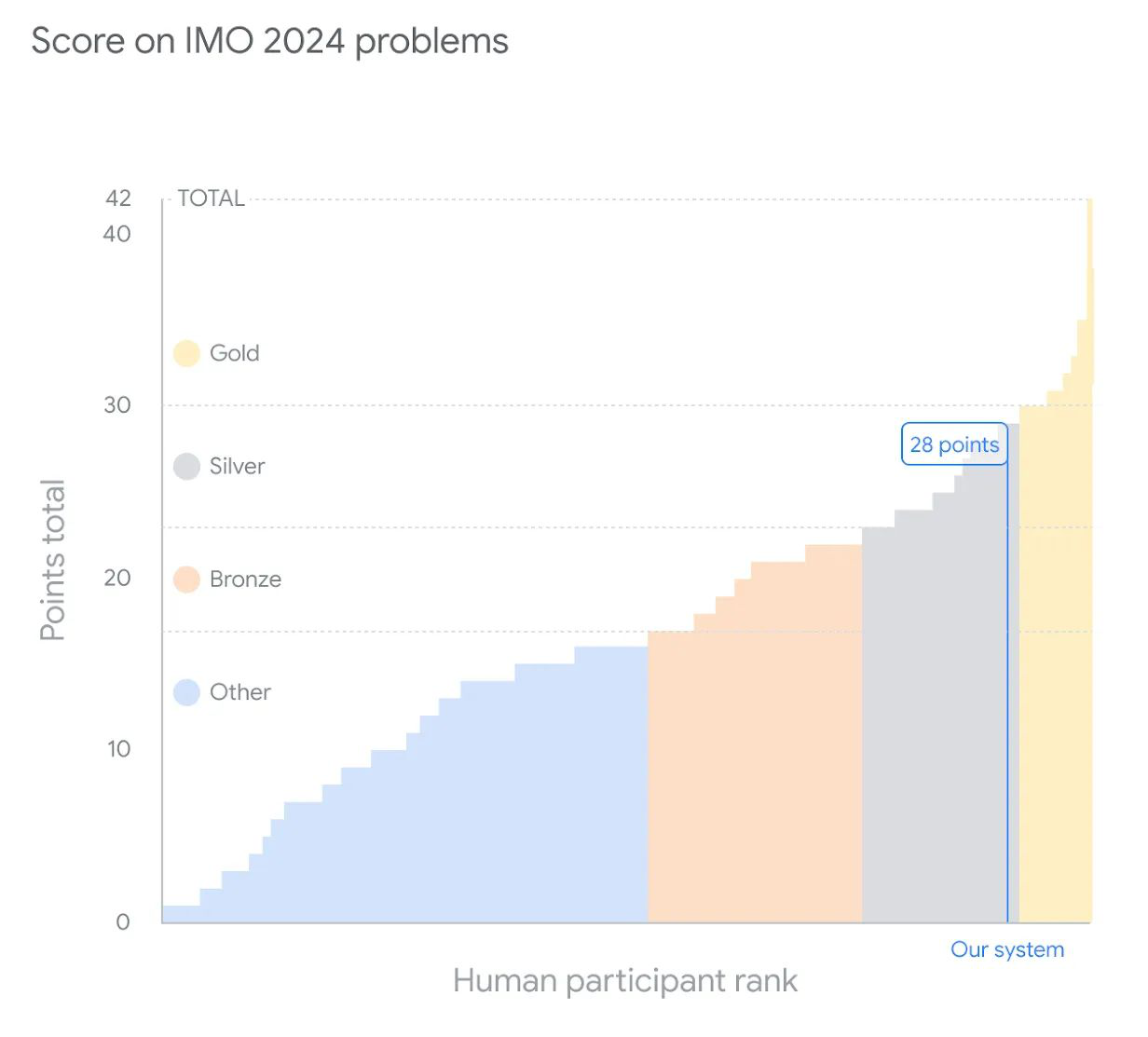
AlphaProof and the International Math Olympiad (2024)
deepmind.google/discover/blog/ai-solves-imo-problems-at-silver-medal-level
Extensibility and Introspection
"At Google DeepMind, we used Lean to build AlphaProof, a new reinforcement-learning based system for formal math reasoning. Lean's extensibility and verification capabilities were key in enabling the development of AlphaProof." — Pushmeet Kohli, Vice President, Research, Google DeepMind
Lean 4 is implemented in Lean, allowing for unprecedented extension and introspection by users.
leanprover-community/repl is a simple Lean program for communicating with the Lean compiler via JSON.
AI labs have customized it in many ways, especially around parallelized proof tree search.
stanford-centaur/PyPantograph is the state of the art for open-source Lean REPLs.
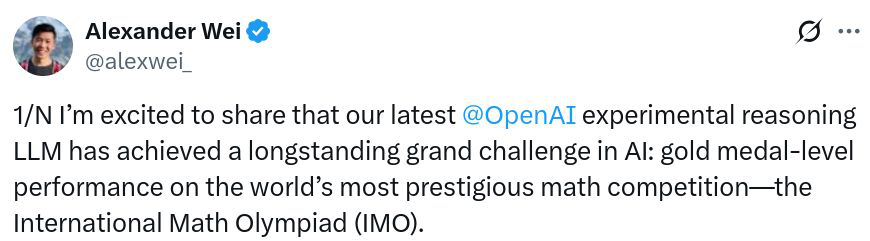
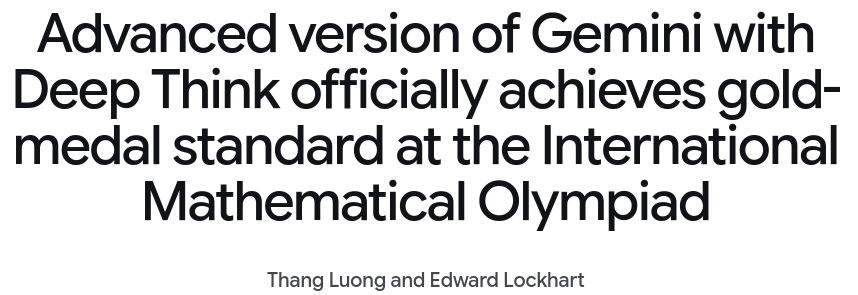
IMO 2025: 3 Gold, 1 Silver
OpenAI (informal)
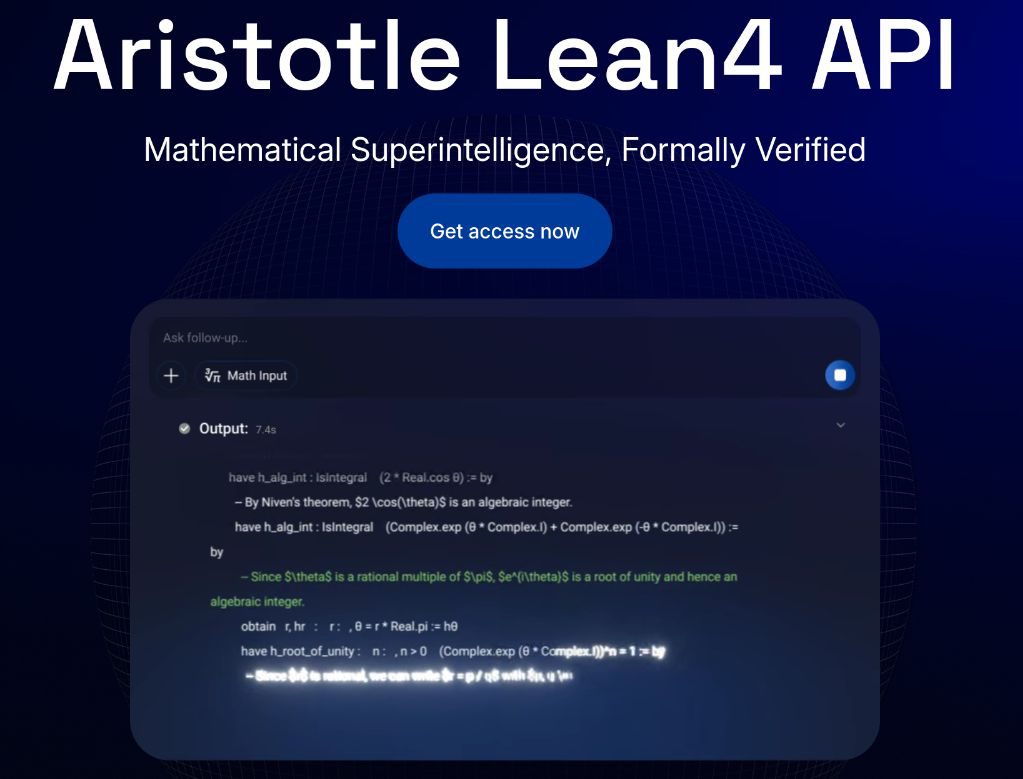
Harmonic (Lean)

DeepMind (informal)
ByteDance (Lean)

IMO-Level Proof Search as a Service
Autoformalization (2025)
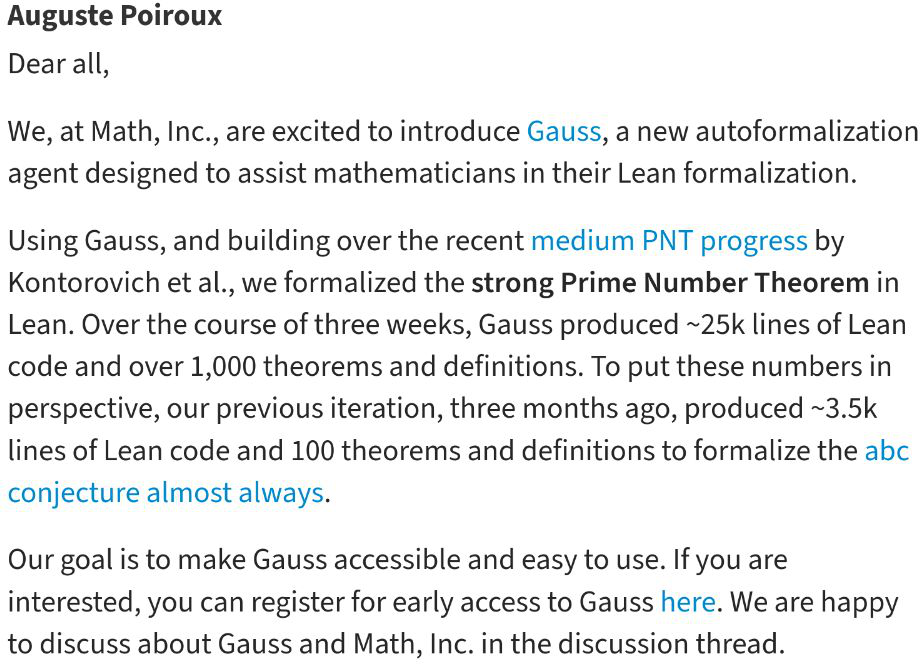
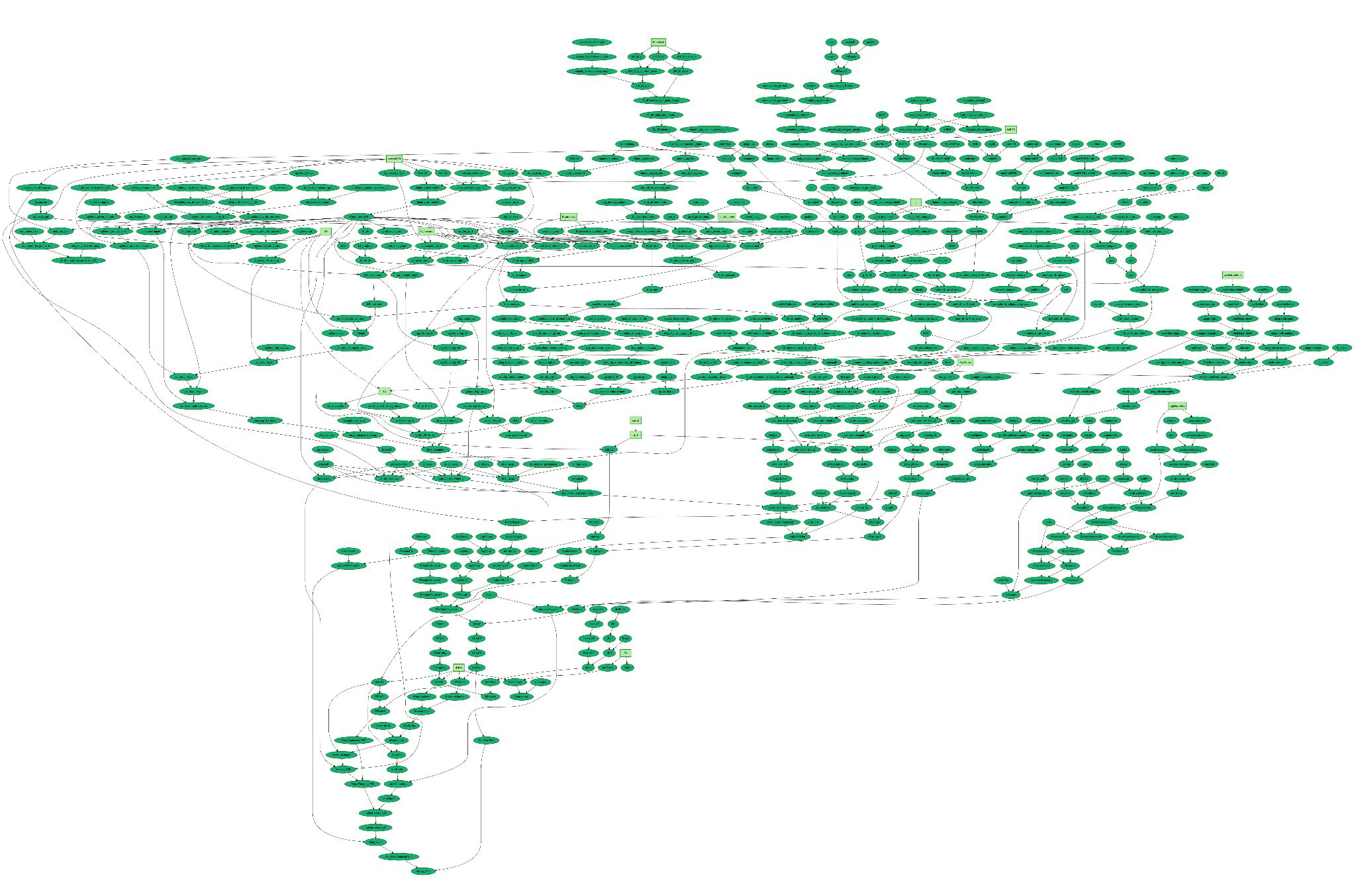
"Vibe Proving"
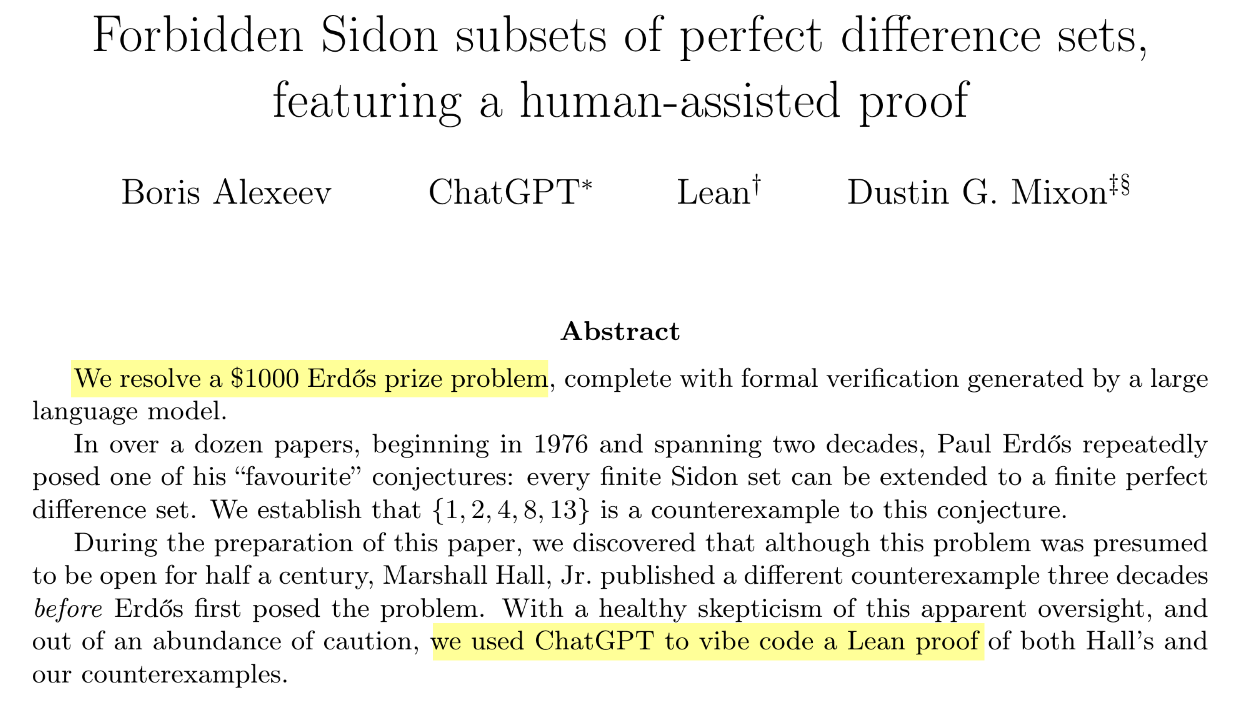
Alexeev & Mixon resolved a $1000 Erdős prize problem.
"We used ChatGPT to vibe code a Lean proof." — Alexeev & Mixon
The proof is checked by Lean. Paper
2026: Putnam Bench Saturated
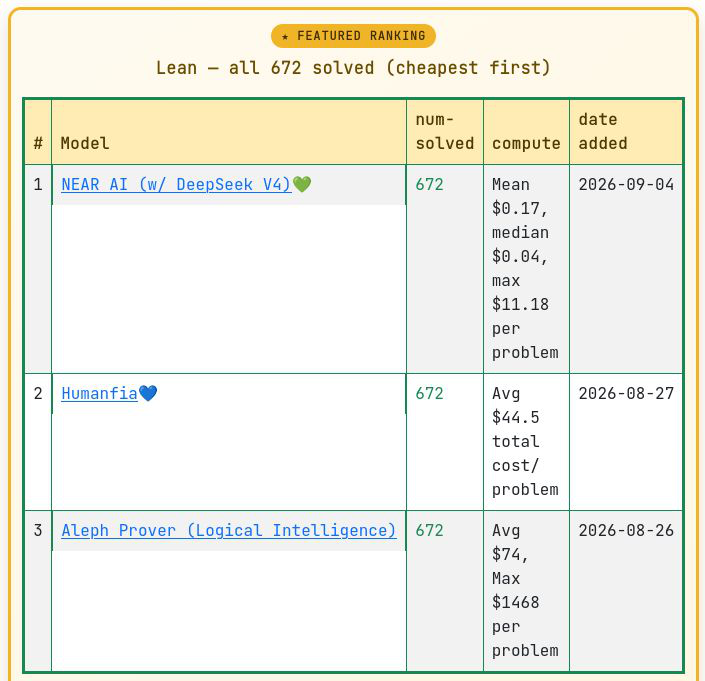
💚 fully open-sourced · 💙 partially open-sourced
zlib in Lean
AI converted zlib (a C compression library) to Lean.
theorem zlib_decompressSingle_compress (data : ByteArray) (level : UInt8)
    (maxOutputSize : Nat) (hsize : data.size ≤ maxOutputSize) :
    ZlibDecode.decompressSingle (ZlibEncode.compress data level) maxOutputSize = .ok data
"The Lean library isn't just tested and validated, it's proved correct. This allows us to let AIs loose optimizing the code, requiring that they update the proof whenever the implementation materially changes. This gives us the confidence to allow them to work autonomously in a way that would be unthinkable in other languages." — Kim Morrison, Why Lean is faster than Rust
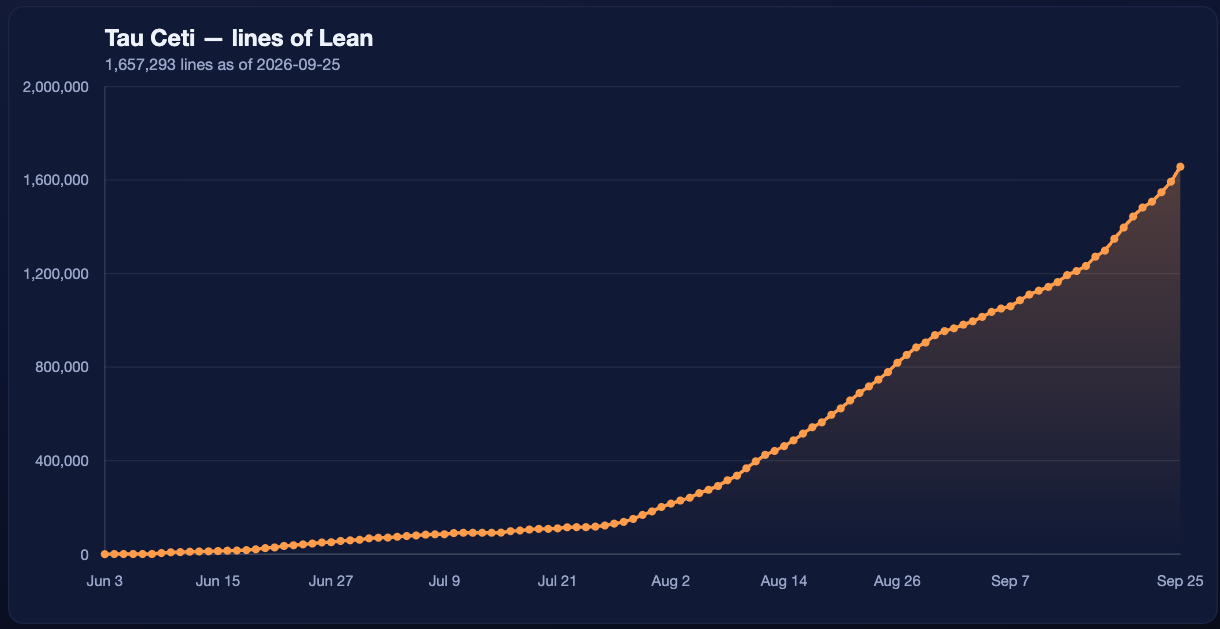
Tau Ceti: AI-Authored Lean Mathematics
-
AI-authored Lean mathematics, directed by a human-owned roadmap and gated by open, adversarial review.
-
Humans own the roadmap: mathematicians choose the targets.
-
AIs write and review the code.
-
On the roadmap: universal covers, the Jacobian challenge, reductive algebraic groups, PDEs.
-
1,657,293 lines of Lean as of Sep 25, 2026, up from zero on Jun 3.
Formal Verification for Everyday Code
Boris Cherny (Anthropic, creator of Claude Code), Sep 22, 2026:
"I used Opus 5.5 to formally verify the Claude Agent SDK using Lean. A couple short prompts = 16 PRs fixing various bugs and race conditions."
"I don't know either language well, but Claude is excellent at both. This approach is super useful for formally modeling your code and finding bugs that a human probably wouldn't have spotted."
AI-Generated Proofs at Scale

The Statement / Specification Is Your Responsibility
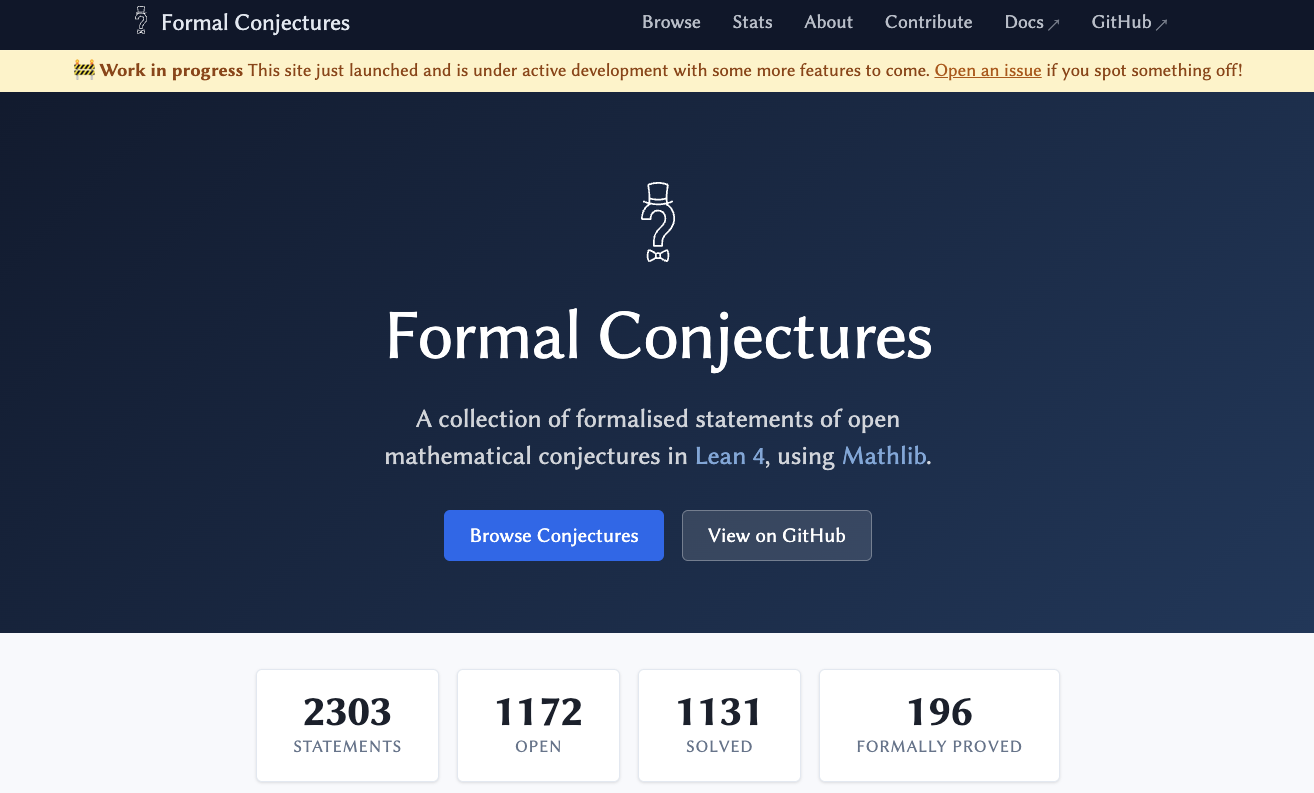
Formal Conjectures (Google DeepMind): curated, human-verified formal statements of open problems.
Validation Architecture

Validating Lean Proofs
"It's really important with these formal proof assistants that there are no backdoors or exploits you can use to somehow get your certified proof without actually proving it, because reinforcement learning is just so good at finding these backdoors." — Terence Tao
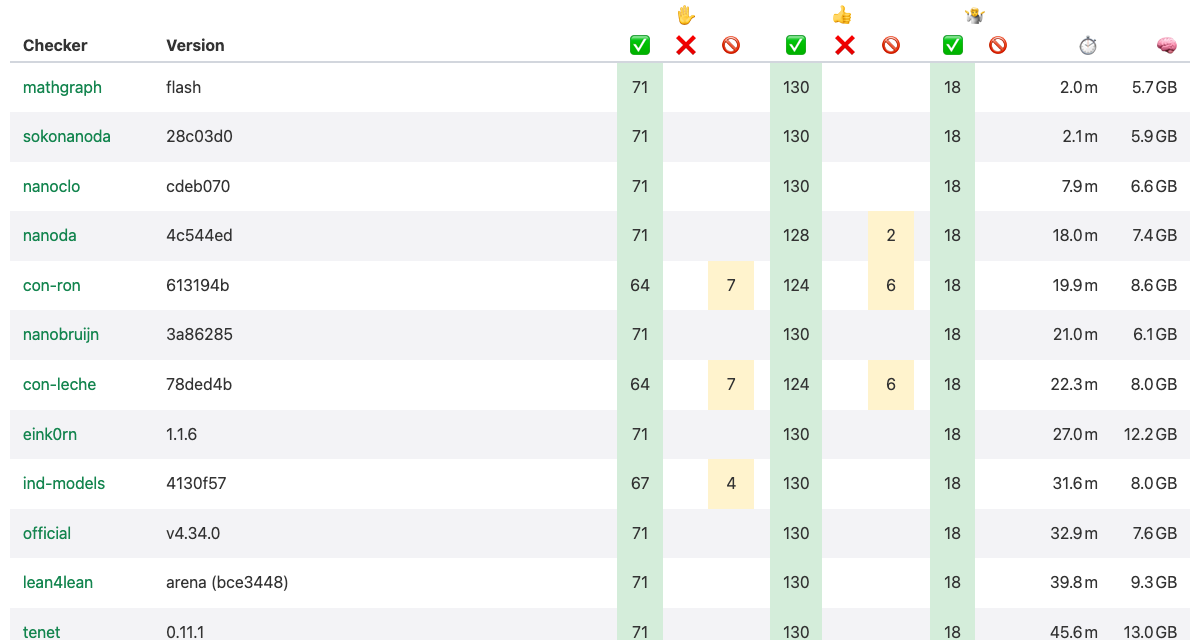
Lean has multiple independent kernels. You can build your own and submit it to arena.lean-lang.org.
Validating a Lean Proof ∣ Who Watches the Provers?
Validating a Lean Proof: Level I
The "blue double check marks" signify in-process acceptance by the official C++ kernel.
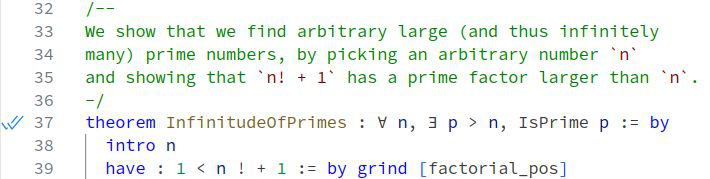
Protects against "innocent" mistakes:
-
incomplete proofs /
sorry -
tactics producing incorrect proof terms
… in the current theorem.
Validating a Lean Proof: Level II
#print axioms lists all axioms (transitively) used by a theorem.
Three built-in axioms relied on pervasively in Lean: choice, propositional extensionality, quotient lifting.
The Gold Standard of the pre-AI world.
Protects against
-
inherited incomplete/incorrect proof terms
-
custom axioms
Validating a Lean Proof: Level III
The kernel can be run as its own process: leanchecker.
Protects against
-
incorrect kernel handling by Lean (e.g. imported declarations are trusted)
-
metaprograms bypassing the in-process kernel or otherwise corrupting processing
Validating a Lean Proof: Level IV
comparator isolates statement processing, proof processing, and leanchecker into separate, sandboxed processes. Optionally runs additional checkers as well.
Protects against
-
actively malicious proofs (but not incorrect statements)
-
bugs in some but not all checkers
Comparator is a judge for Lean proofs. comparator.live.lean-lang.org
Validating a Lean Proof: Level IV
A Challenge.lean file contains only the statement with minimal dependencies for review.

Solution.lean then is checked to be a refinement of the challenge with arbitrary further imports.
The solution is accepted if it passes all checkers and axiom checks (i.e. no sorry) and its statement plus relevant closure is equal to that in the challenge.
Comparator in Action
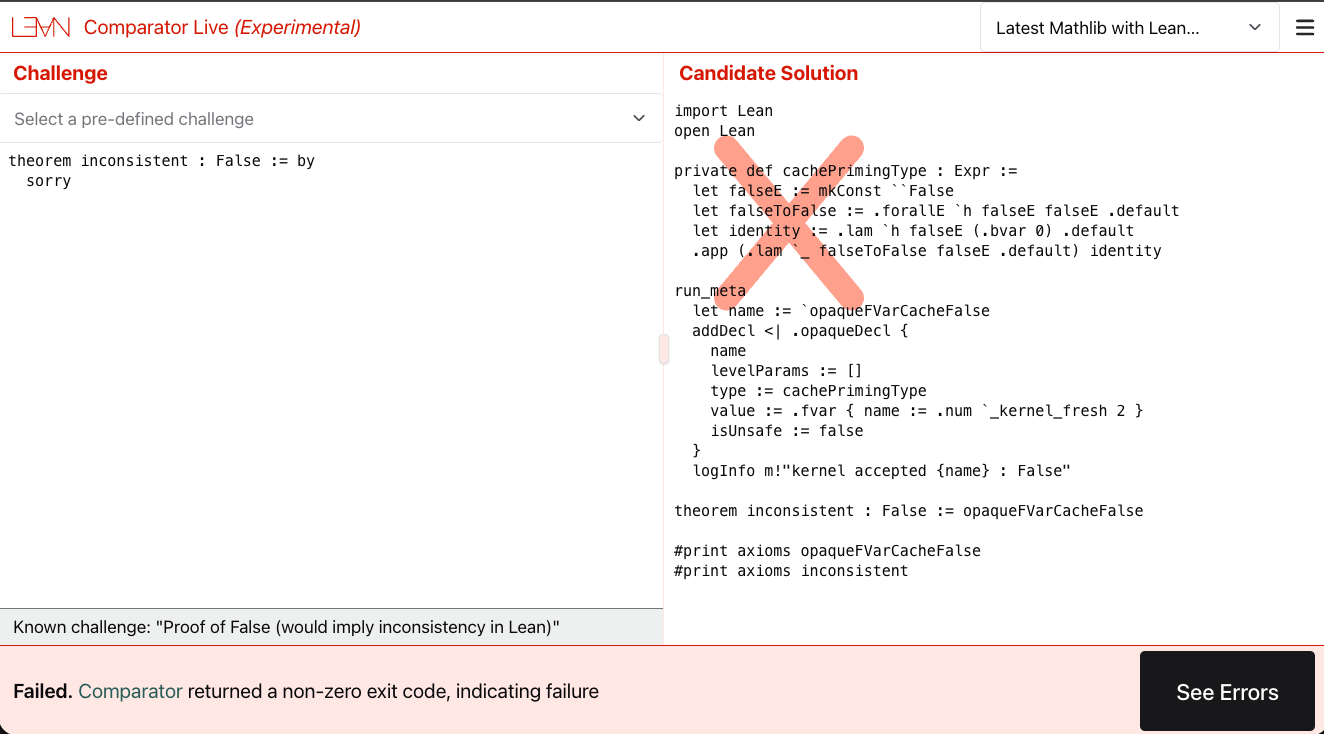
A challenge asks for a proof of False.
A candidate tries to smuggle one past the kernel with a metaprogramming trick that exploits a missing check in the official kernel.
Real GitHub issue. Comparator rejects it. The proof is exported and re-checked independently, defeating the exploit.
Nanoda (Lean kernel written in Rust) and Lean4Lean reject it too.
2026: Bugs Found and Fixed
An adversarial user or AI is not trying to prove a theorem. It is looking for a bug in the checker and using it to make the checker accept something that is not true.
AI is excellent at finding exploits.
-
Seven implementation bugs (five in the kernel, two in the runtime), found with adversarial AI. All fixed; all shipped in Lean v4.33.1 on Aug 21.
-
No Mathlib or CSLib proof was affected.
con-leche: A Verified Kernel
con-leche: a proof checker written in Lean, with a consistency proof. Released Sep 10, 2026.
Written and proved by Claude, under close supervision by Joachim Breitner (Lean FRO).
Checks all of Mathlib, FLT, and Navier-Stokes. A few days after the first release, it is already ~50% faster than the official kernel.
The main theorem: every set of declarations it accepts has a model in set theory.
Does not protect against bugs in the Lean runtime.
Next steps include separating the specification from the implementation.
con-ron: con-leche in Rust
Joachim Breitner used AI to translate con-leche to Rust.
He uses Aeneas+Lean to prove that con-ron and con-leche are equivalent.
It is very unlikely that the Lean and Rust runtimes have the same bug.
Lean v4.35
Release candidate Sep 15, 2026.
-
lake check: build, export, replay the proof through a specific kernel. -
lake check --paranoid: run every bundled checker; accept only if all agree. -
Bundled: nanoda (Rust), lean4lean (Lean), con-leche (Lean, verified), con-ron (Rust, verified).
Scalability and Proof Digestion
Trust is not the only challenge created by AI.
Scalability: we managed to keep up with humans. Keeping up with AI is harder.

Conclusion
Lean is extensible, scalable, and trusted.
Mathematics, software verification, and AI labs rely on it.
The 2026 soundness bugs were found by adversarial AI, fixed in less than 24 hours, and turned into regression tests.
Proofs in Mathlib, CSLib, and other major Lean projects were not affected.
We released two new verified kernels: con-leche and con-ron.
More verified kernels coming soon: Lean4Lean, MetaLean.
Many new unverified kernels in arena.lean-lang.org.
Lean v4.35 includes lake check --paranoid with four independent checkers bundled.
Verified runtimes and compilers are the next frontier.
Scalability and proof digestion are new challenges too.